
The D&D Method for Better Character Development
How to Use Dungeons & Dragons to Define Your Character’s Deepest Fears and Needs

Learning Objective: By the end of this post, you will know how to use core character creation techniques from Dungeons & Dragons to develop compelling characters for any story medium.
I’ve spent the last month playing Dungeons & Dragons in Toronto. After visiting five other countries, my partner and I are rounding out our nomadic year in Canada. On a whim, I googled “D&D in Toronto” and discovered the impressively organized communities of Toronto DnD and the drop-in games run by Jordan Smith, Aaron Millard, and Chris Winkelaar. A few weeks ago, I created a new D&D character for the first time in years, and I realized that D&D’s character creation system could be used as an excellent character development tool for novelists of all genres.
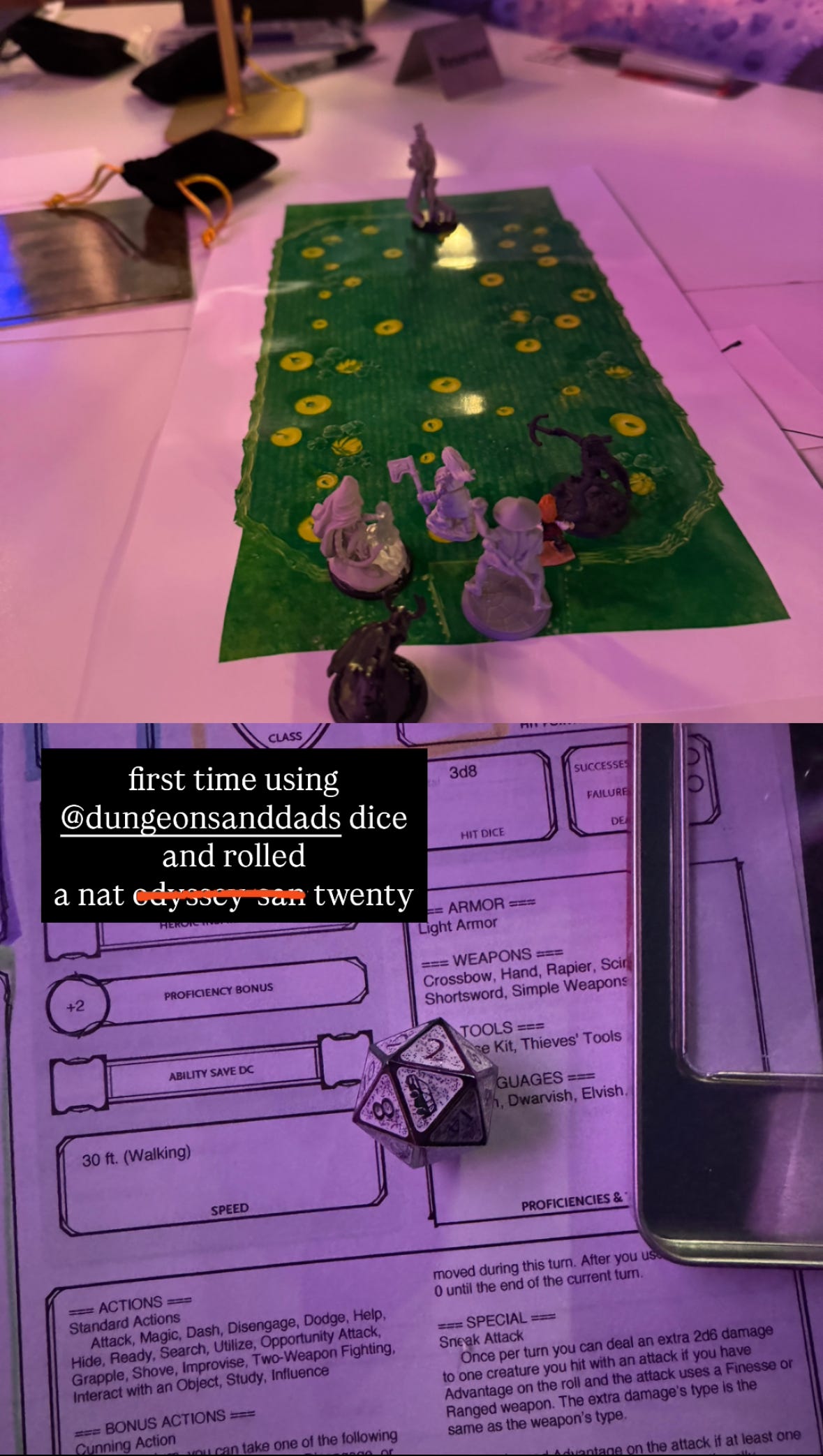
In an interview with Auzin Ahmadi at Soft Hobbies, I talked about how Dungeons & Dragons taught me more about storytelling than my MFA did. Today, I’m launching a four-part series where we’ll be breaking down how genre and literary fiction writers can use D&D tactics to deepen the character development for their stories. These craft lessons will introduce the concepts of ability scores, ideals, bonds, and flaws as means to develop our protagonists’ belief systems. With newly fleshed out belief systems in hand, we’ll dive into guiding questions that will help us create conflict that challenges our characters to transform and complete their story arcs.
As always, you know what to do: take anything that’s useful to you and your writing life and leave everything that’s not behind.
Check Out Part Two
Play Dungeons & Dragons with Me!
In January 2026, I’m going to host online D&D games for our community. These games will be a great way for us to connect in real-time and explore collaborative storytelling together. After the excellent turn out for our Write-In earlier this year, I’ve been wanting to create more opportunities for us to meet face-to-face (online!) and share our love for stories. Our D&D games welcome players of all experience levels. Whether you’re completely new to the game or a long-time player, I hope you consider joining us for a one-shot game. I will teach any new players how to play, and the game will be a relaxed and inclusive environment for all of us to hang out and get to know each other.
Since we’re a few months out from January, I’d love to gauge interest and collect some data on people’s availability. My plan is to lead 2-3 single-session games on weekends in January. There won’t be any continuity between the game sessions, so players can sign up for whichever date works best and play through a story that wraps up in one session. Each game will run for approximately 3 hours. If you’re interested in playing with us, fill out this Google form to indicate your interest and which weekends/time of day works best for your schedule. Please complete the form by 11:59 PM EST on Friday, November 7th. This form is NOT the official sign-up sheet, so you won’t be committing to a game just yet—only expressing interest for now. If you miss this submission window, there will be another announcement for the actual sign up sheet in the coming weeks.
Hope to see you at a game!
Ability Scores as Character Development
When it comes to character personalities, the Dungeon & Dragons handbook1 defines personality as an “array of traits, mannerisms, habits, beliefs, and flaws that give a person a unique identity.” To develop a character’s personality, the handbook breaks this task down into smaller writing exercises that hash out four key characteristics: personality traits, ideals, bonds, and flaws.
Today, we’ll be defining personality traits in terms of ability scores and applying these traits and scores to character creation for fiction. If you’d like to explore these traits within the context of D&D as a game, check out this brilliant video by Dungeon Dudes.
Personality Traits
The D&D handbook recommends giving your character two personality traits. These traits work best when they are rooted in specificity that reveals something about the character’s past accomplishments, future goals, and current fears. Since this is very basic character development stuff, I’d like to up the ante by connecting personality traits to the D&D concept of ability scores. In D&D, all characters and monsters have six abilities that determine their mental and physical aptitude. The handbook defines these abilities as follows:
Strength: A measure of physical might
Examples: Athletics, weightlifting, etc.
Dexterity: A measure of agility, reflexes, and balance
Examples: Stealth, Sleight of Hand, Acrobatics
Constitution: A measure of health and stamina
Examples: Endurance, alcohol tolerance, sleep requirements, resistance to illness
Intelligence: A measure of reasoning and memory
Examples: Knowledge of history, nature, religion, magic, the ability to sleuth/deduce
Wisdom: A measure of perceptiveness and mental fortitude
Examples: Insight into motives and intentions of others, animal handling, perception of environment, knowledge of survival in the great outdoors.
Charisma: A measure of confidence, poise, and charm
Examples: Ability to persuade, perform, intimidate, or convincingly deceive others.
When it comes to characters in D&D, each ability score is assigned a number from 1 to 20. This score correlates to the character’s competency in that ability. A score between 1 and 9 signifies a weak competency. A score between 10 and 11 means the character has an average human competency in that ability. 12 to 19 signifies a strong competency, and 20 equates a level of mastery. In the game, there are three ways to determine ability scores, but for our purposes, we’ll use the standard array, which gives us six predetermined scores we can mete out to each of our character’s abilities. These scores are 15, 14, 13, 12, 10, and 8.
For a wizard, their ability scores might look something like this:
Strength: 8
Dexterity: 12
Constitution: 13
Intelligence: 15
Wisdom: 14
Charisma: 10
Before we jump into the writing exercise, let’s look at Gale from Baldur’s Gate 3—a narrative video game set in the world of D&D—as an example for translating these scores into story.
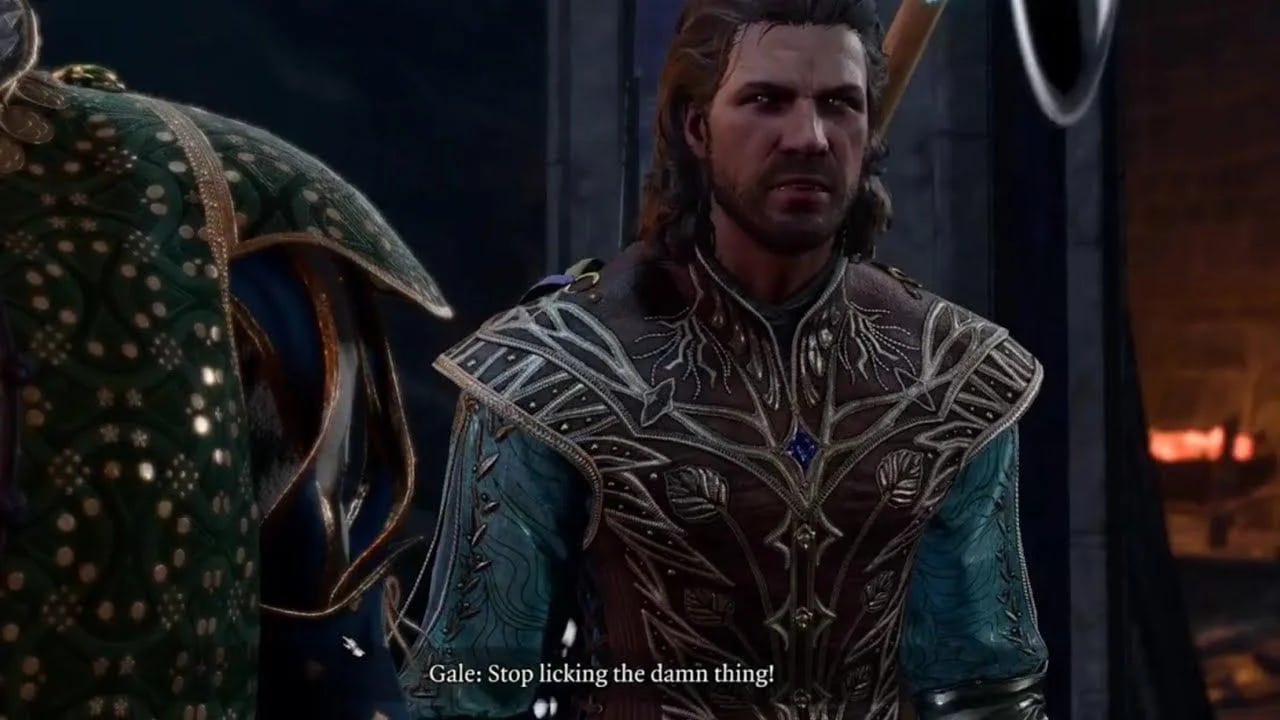
Gale is a wizard who has dedicated his life to studying arcane magic. Before the start of the story, he spent his days in a tower reading, practicing magic, and unwinding with a nice cup of tea. Gale has always prided himself on having read every book in the Waterdeep library, and his high emotional intelligence enables him to read a room and perceive the emotional experiences of those around him. In the past, Gale was exposed to dark magic, and this exposure has made him sturdier than most, enabling him to better resist illness and hangovers than some of his companions. When it comes to dexterity, the somatic components of spellcasting have made him quite nimble. As a result, Gale is slightly better than the average person when it comes to moving through the world with grace or using sleight of hand for things like lock picking or close-up magic. As for wit and charm, Gale possesses the charisma of an average person. Depending on luck and circumstances, he is occasionally able to talk himself out of sticky situations. Despite all of his assets, Gale will almost definitely lose any arm wrestle, and he is the last person you’d call to help you move a couch.
Now, in a game—be it D&D or Baldur’s Gate 3—these ability scores simply signify how good (or bad) Gale would be at certain actions. The paragraph above adds a roleplay element that offers narrative explanations of why Gale is better at certain tasks than others. This roleplay element is what we’re going to hone in on as writers developing characters. If you’re a genre writer, you’re likely able to see how you might assign the standard array scores to your protagonist. However, if you’re a literary fiction writer like me, this exercise might not obviously line up with your protagonist. I just finished reading Deep Cuts2 by Holly Brickley, so let’s turn to her protagonist, Percy as a literary example.
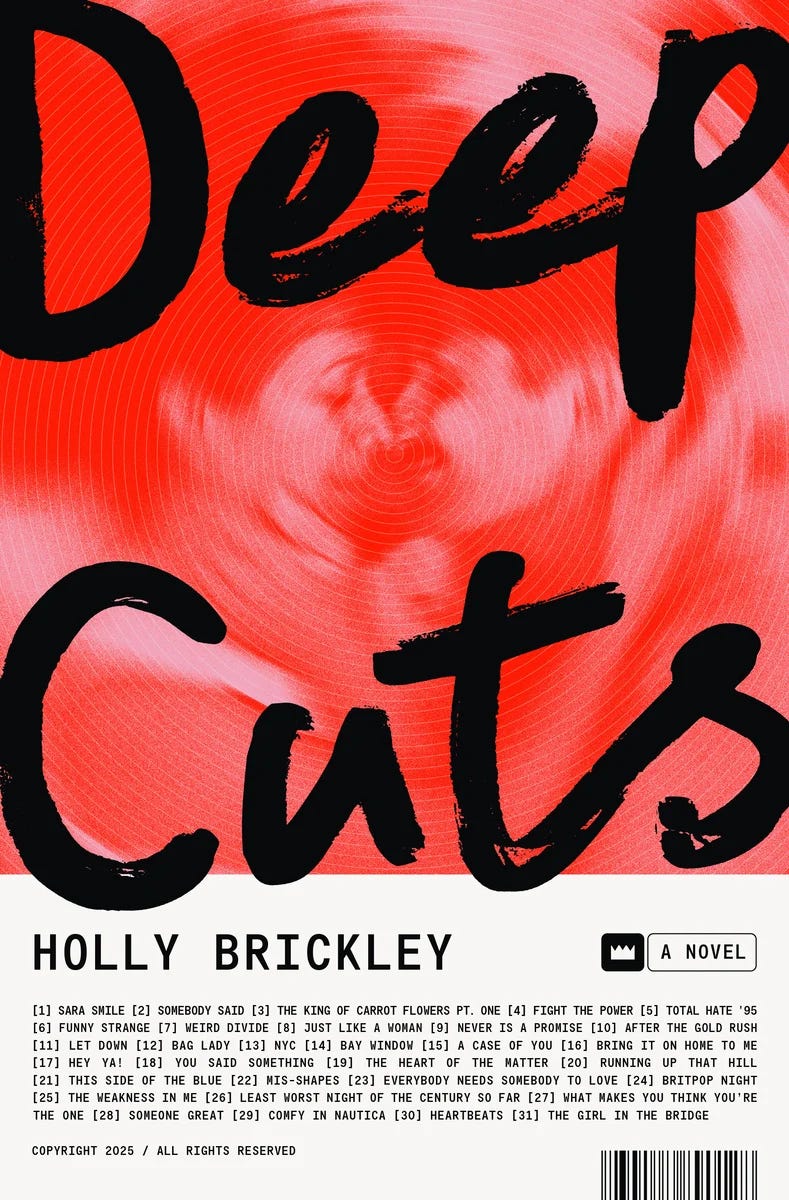
Deep Cuts follows the story of Percy, an aspiring music journalist who has no talent for playing music. Due to a deep insecurity about never being “good enough,” Percy has never learned to play an instrument despite her mother’s past as a professional violinist. Even though Percy has no practical musical knowledge, she uses her taste in music to help her best friend, Joe—who she is more than a little in love with—write songs. As Joe and his band, Caroline, break into the music industry, the novel complicates as songwriter ownership over Caroline’s songs comes into question and Percy and Joe’s will-they-won’t-they friendship puts a strain on other relationships in their lives.
Ability Scores in Literary Fiction
Since Deep Cuts is social realism, there are no magic (or other genre) elements that connect one-to-one with ability scores. Percy is not running around picking locks, casting spells, or swinging great swords in her story world. However, these ability scores still correlate with traits we all possess in real life. Dexterity determines how clumsy a person is. Constitution determines how little sleep they can function on. Strength can determine physical fitness and so on and so forth.
For Percy, her ability scores might look something like this:
Strength: 10
Dexterity: 14
Constitution: 13
Intelligence: 15
Wisdom: 8
Charisma: 12
Though charming, Percy often finds herself saying wrong—or even mean—things to others. This lack of wisdom and perception for the feelings of others often leads to conflict with her family, friends, and romantic partners. As a result, she sees the world through a self-centered lens that often augments her jealousy when it comes to other people’s talents and their relationships with each other. Percy makes up for her lack of emotional intelligence with a vast knowledge of music. Though she doesn’t know how to play an instrument herself, she is deft enough with a keyboard to be able to tap out a melody that a real musician can expand upon. As a whole, Percy moves through her story with the external goal of writing songs, but she needs to overcome her insecurities about learning to play an instrument in order to achieve her dreams. Until she can face her fears and learn to play an instrument herself, Percy relies on her intelligence and wit to convince music industry professionals to take her on as a songwriting partner.
While not every ability score will be relevant to every story, the standard array above can help us—as writers—make sense of our protagonists’ literal intelligence, emotional intelligence, and physical capabilities. Most importantly, this exercise helps us concretely understand how these traits impact their external goals, internal needs, and their overall trajectory in the story.
Before starting our writing exercise for today, I recommend taking a look at our character goal craft lesson if you haven’t already:
