
The ‘Before and After’ Method for Plot
Reese’s Book Club Author Rachel Hochhauser’s framework for marketable fiction


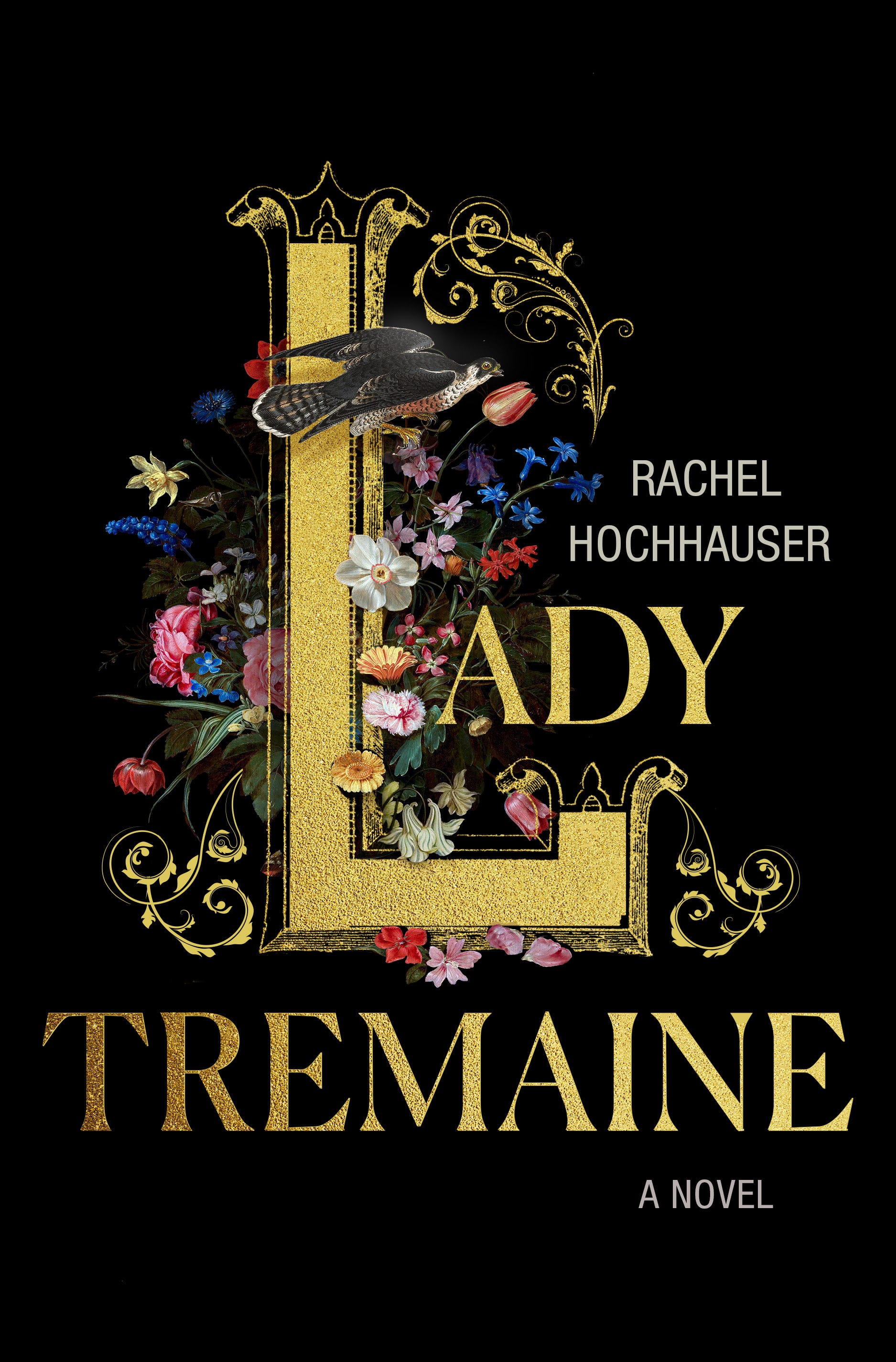
Welcome back to Book Stack, the interview series where authors break down their deepest craft obsessions. Today, we’re sitting down with Rachel Hochhauser, the brilliant author of Lady Tremaine1. A Reese’s Book Club Pick, Book of the Month Club Selection, IndieNext Pick, and March LibraryReads Pick, Lady Tremaine entered the world last week with a bang. I first met Rachel in the 2026 Debut Discord, and her novel was the first book I received in our advance reader copy exchange. I’ve been dying to interview her ever since I read Lady Tremaine last year, and I’m so thrilled to share her framework for developing plot and story structure as simple “before and afters.”
Before we jump in, you know what to do: take anything that’s useful to you and your writing life and leave everything that’s not behind.
1. Most writers have a craft concept that they’ve struggled with and obsessively studied. In your experience, what craft concept do you believe writers should master before seeking traditional publication?
For a long time, I believed that great writing was synonymous with great sentences. I spent my early years obsessed with line-level craft. And, while I still care deeply about beautiful sentences, I’ve come to realize that my hyperfocus left out something essential: why readers pick up a book in the first place. And, perhaps more importantly, why they don’t abandon it after a chapter or two.
A book needs propulsion. A reader needs a reason to keep turning pages, usually in the form of a question they’re subconsciously reading to have answered. That question looks different depending on the genre—will the boy and girl get together (Tia Williams’ Seven Days in June), will this person find peace and satisfaction (Alison Espach’s The Wedding People), who is the killer (Agatha Christie’s The Murder of Roger Akroyd), will someone survive (Lauren Groff’s The Vaster Wilds)—but the engine is the same. There has to be something pulling us forward.
I tend to think about this in terms of both momentum and satisfaction. Momentum is the central force that keeps the reader going. Satisfaction is what happens when they get to the end—what has changed, what has shifted, what feels resolved or meaningfully altered.
For me, this often comes down to what I think of as before-and-afters. There are many ways to talk about this—plot structure, character arcs, narrative turns—but at its core, it’s about knowing where you begin and where you end, and then deliberately charting the path between the two.
You can look at before-and-afters across the entire novel: for each character, for the setting, for the central problem or premise. Is something changing? Is anything moving? That movement is what creates momentum.
From a craft perspective, this means getting clear about the driving force of your book. It sounds obvious, but many writers need to pause and really ask themselves: What is this book about? Not in the abstract, but narratively. What is the thing that must be confronted, answered, resolved?
When I think about before-and-afters at the character level, I try to be specific. Where is this person physically, emotionally, circumstantially at the beginning? Where are they at the end? These arcs don’t need to be dramatic but the human brain is wired for change. We want to see that the restless person has learned how to be still. That the man who couldn’t scramble an egg at the start of the book is, by the end, cooking a three-course brunch for his mother.
Beautiful prose may get a reader to pause and admire a paragraph. But story—movement, change, consequence—is what gets them to stay.
2. If you were curating an essential “Book Stack” of three books that perfectly exemplify plot and character transformation, what three titles would you pull from your bookshelf?
I shy away from the idea of selecting a “perfect,” exemplary stack. The books that have taught me the most are already pretty well read and circulated. (Pride & Prejudice, for example, was formative, but I’m not sure how helpful it is, in the context of talking to other writers, to tell them to read it when they’re likely well aware.) ButI do think it’s really useful to be constantly reading with an eye for craft, and I don’t mean in the sense of dissecting and analyzing without end, so much as paying attention to your own feelings as a reader. When you are bored, or excited, or enthralled, what is happening? How did the author do that?
A few books I’ve read—and marveled at, for individual reasons—in the last year that offer a nice sense of my “before and after” theory, or propulsion, are as follows. Each of these authors has their own distinct style of prose, and the stories are all completely different from one another. But they’re united in that there’s a large, central question driving the book forward.
Margot’s Got Money Troubles by Rufi Thorpe: This book drops us into the chaotic and darkly funny life of a young woman navigating unexpected motherhood. It asks: will Margot find a way to keep her child? As a reader, you want her to, and so you keep going to find out (and also to enjoy Thorpe’s incredible writing, which somehow manages to weave in Arby’s, OnlyFans and pro-wrestling into the narrative.)
Isola by Allega Goodman: Spare and lyrical, this historical fiction novel tells the true-life inspired story of a woman exiled to a remote island in the 16th century. Its question is simple and primal: will she survive—and how? Ultimately, the novel becomes less about isolation than the protagonist’s ferocity. We see her before-and-afters in ways that are physical, emotional, and all-consuming.
The Other Valley by Scott Alexander Howard: This book is elegantly constructed and the writing is so clean—the story unfolds across parallel timelines in a place where neighboring towns exist in different years. It asks questions about time, love, and consequence, but its central question revolves around whether a death that has already happened can be prevented. The before and afters are numerous because there are different strands of time and different futures—it’s truly something!
3. How did you incorporate this framework in Lady Tremaine?
Lady Tremaine is a reimagining of Cinderella told from the perspective of the so-called wicked stepmother. It takes a close look at the societal forces and reality of raising daughters as a single woman. In crafting the novel, I thought about propulsion on two levels. There’s the meta-layer: readers enter knowing certain landmarks—the ball, the fairy godmother—and part of the tension lies in how and when the story diverges from what we expect. At what point does the familiar disappear, and how does the novel reconcile a traditional fairy-tale ending with a protagonist who actively resists it? Beneath that framework is the more elemental drive: will this woman secure what she needs to survive and protect her family? Those twin questions—about story and survival—shaped the book’s structure.
4. Once a writer feels they have successfully integrated a question-driven narrative into their manuscript, what is the single most important step they should take before sending the book to agents or editors?
Assuming a writer has a fully polished manuscript—one they truly feel they can’t push further on their own—then I’d say perfecting their query letter. I suffered, for a long while, from thinking too literally for the query. It isn’t a synopsis; it’s a pitch. Its job is to spark curiosity, to make someone say, “I want to read that.” A query doesn’t need to capture every nuance of the book—it needs to distill the core tension and central question that drives it. If you can articulate that propulsion clearly and compellingly, you’re already doing the most important work.
Rachel Hochhauser is a writer and co-founder of Piecework, a design and jigsaw puzzle company. Raised in Santa Barbara, she studied at New York University and earned her master’s in fiction from the University of Southern California. She now lives in Portland, Oregon, with her husband and two young daughters. Lady Tremaine is her first novel.
Where to Find Rachel:

How do you create “before and afters” in your own stories? What are some books that create captivating character transformations with movement, change, consequence?
Let’s talk plot and story structure in the comments:
Until next time,
Kat
This post includes affiliate links. I may receive a commission if you make a purchase through these links. Purchasing books through the Craft with Kat Bookshop supports the free writing resources I share here on Substack.
 | A guest post by
|
Fantastic interview! I’ve been focusing on my hero’s transformation and workshopping how to make it compelling. I appreciate the book recommendations that depict thoughtful before and after methods, and am especially excited to read Lady Tremaine!
This is a great complement to the previous interview that focused on line-level craft. Admittedly I tend to put plot on the back burner in favor of style (my favorite books are the ones without much action, a la Virginia Woolf), but the reframe as "momentum" is very helpful! I'll be keeping it in mind, thanks a lot :)