
This Plot Diagram Will Save Your Writing Life
How I Sold My Debut Novel to a Big 5 Publisher


Most plot diagrams are bullshit, but I promise this one isn’t. When I was writing with my Khôra cohort in 2021, I was just starting to transition from my discovery writer ways into a writer who outlines. Discovery writers “fly by the seat of their pants” and form the story on the page as they write, whereas outliners plan the story prior to writing any actual pages. Some outliners plan the macroscopic plot and discovery write on a chapter-to-chapter basis. Others plan every turn in the story down to a granular scene level before writing a single word.
When Leigh Hopkins recruited me for Issues 5-8, I had been writing professionally for nearly ten years. For most of my writing life, I had identified as a discovery writer, until January 2021, when my novel was dying on submission to publishers. The feedback from editors generally came to the same consensus—the voice of the novel was great, but the story didn’t have enough concrete plot to carry its voice. By the time I joined my Khôra cohort, it was clear that my book wasn’t going to sell in its discovery written/revised state.
I found Khôra at the right time in my writing life because something needed to change in my writing process in order for me to write marketable, plot-driven stories and achieve my lifelong goal of selling a novel to a traditional publisher. Khôra provided me with a safe space and fast-paced schedule to experiment with outlining techniques and refine my new writing process. By the time I published “Magnanimity,” my final story in Issue 8, I discovered a story structure diagram that helped me create concrete and marketable plots for my character-driven literary fiction. This plot diagram ultimately helped me sell my debut novel, Good People, to Simon & Schuster. Here’s how the Greek Dramatic Structure Map can help you write captivating, marketable stories, including “Your Future Self Is a Stranger,” the short story I shared last week. Before we jump in, remember to take anything that’s useful to you and your writing life and leave everything that’s not behind.
Greek Dramatic Structure Map
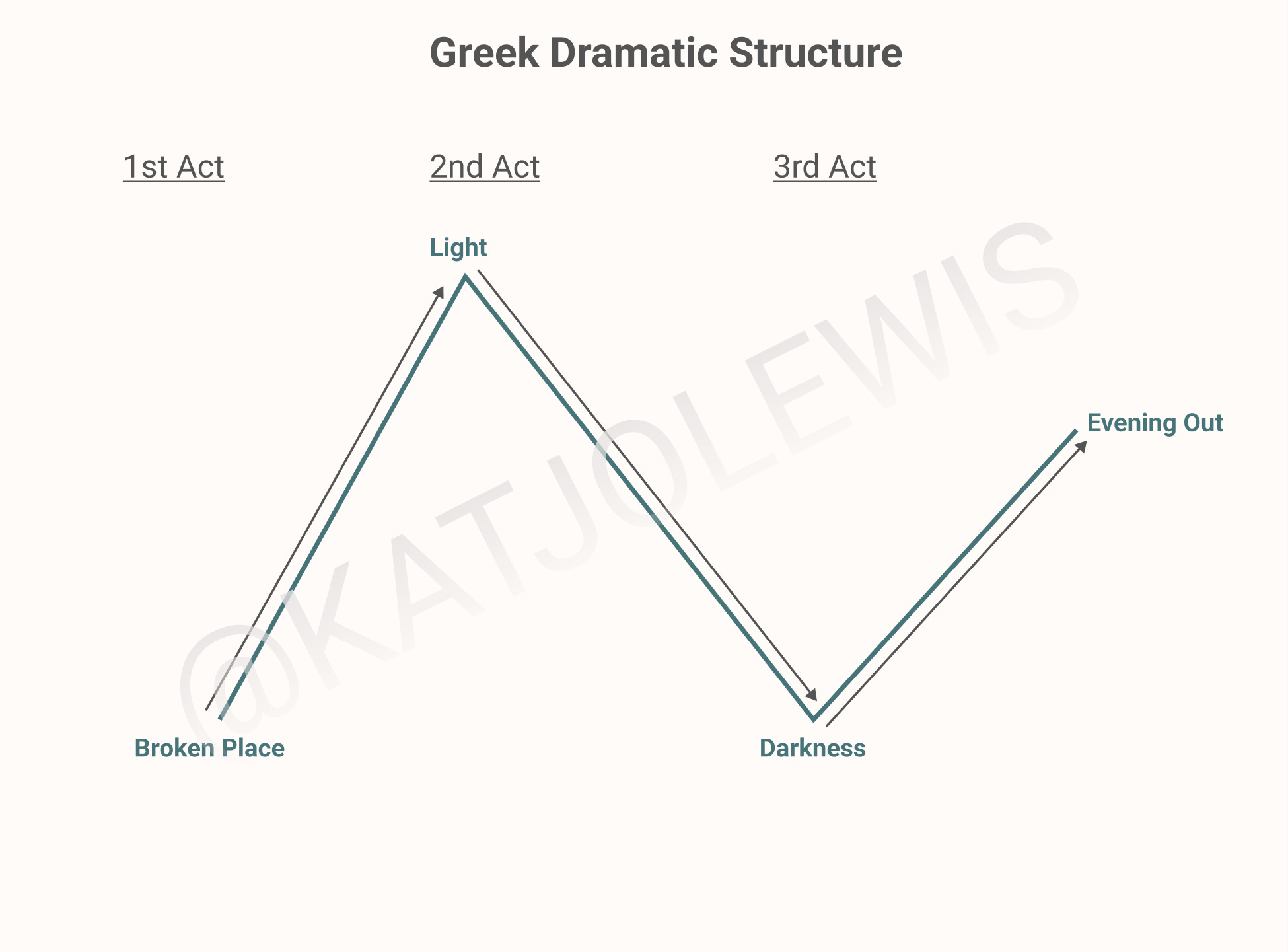
Greek Dramatic Structure is broken into three acts.
Act I ultimately answers this dramatic question: Who is the protagonist? In this first act, the protagonist begins in a Broken Place as they grapple with problems that have plagued them since before the start of the story. An effective broken place answers two questions:
Read the Full Post in Khôra

Craft with Kat Craft Lessons
See you next week!
— Kat
 | A guest post by
|